

Critical Care

When a patient’s condition is critical, every second needs careful attention. At Curis, our critical care team provides close monitoring, life-support, and specialist-led care through every urgent moment.

Conditions

Critical care specialists at Curis manage patients who need close observation, urgent intervention, and advanced medical support, including:
  • Severe infections and sepsis
  • Respiratory distress requiring oxygen or ventilator support
  • Acute medical emergencies requiring intensive monitoring
  • Post-surgical complications requiring ICU care
  • Trauma and accident-related critical conditions
  • Organ function instability in serious illness
  • Patients needing life-support management
  • Critically ill patients with heart, kidney, lung, or neurological complications
  • Emergency cases requiring stabilisation before further treatment
Each patient receives continuous monitoring and timely medical attention to support stabilisation, recovery, and better clinical outcomes.

Treatments & Procedures

Curis Hospitals provide intensive care services designed to manage critical conditions with speed, clinical precision, and multidisciplinary support.
  • Continuous monitoring of vital parameters
  • ICU-based care for critically ill medical and surgical patients
  • Close observation of heart rate, blood pressure, breathing, oxygen levels, and organ function
  • Early identification of clinical changes
  • Timely medical intervention for unstable patients
  • Coordinated care planning with specialists across departments
  • Ventilator support for patients with severe breathing difficulty
  • Respiratory support during critical illness or after major surgery
  • Advanced airway care for emergency and ICU patients
  • Support for patients with trauma, neuro, respiratory, or high-risk surgical conditions
  • Monitoring for patients requiring assisted breathing
  • Step-by-step weaning support when the patient improves
  • Critical care support for severe infections
  • Sepsis recognition and timely management
  • Antibiotic planning and infection monitoring
  • Fluid, oxygen, and organ support where required
  • Laboratory and imaging support for diagnosis and follow-up
  • Close coordination with internal medicine, infectious disease, and laboratory teams
  • ICU care after major or high-risk surgeries
  • Monitoring for post-operative complications
  • Support for patients recovering from complex surgical procedures
  • Pain, breathing, circulation, and organ function monitoring
  • Coordination with anaesthesia and surgical teams
  • Recovery-focused care for medically vulnerable patients
  • Stabilisation of critically ill emergency patients
  • ICU support for accident and trauma cases
  • Management of shock, respiratory distress, and acute deterioration
  • Rapid response for life-threatening conditions
  • Coordination with emergency, radiology, surgery, and blood bank services
  • Care focused on timely action during critical moments
  • Monitoring of kidney, lung, heart, liver, and neurological functions
  • Fluid and electrolyte balance management
  • Support for acute deterioration in chronic illness patients
  • Critical care support for patients with multi-system complications
  • Medication and infusion management for unstable patients
  • Regular reassessment to guide treatment direction
  • Round-the-clock care by trained ICU teams
  • Collaboration with specialists from medicine, surgery, nephrology, pulmonology, cardiology, neurology, and other departments
  • Clinical updates and counselling support for families
  • Infection-controlled ICU environment
  • Nursing care focused on comfort, hygiene, and safety
  • Critical care that combines preparedness, compassion, and continuous attention
Care plans are developed based on each patient’s condition, medical history, and recovery goals.

Our Specialists

Meet the specialists supporting Curis Hospitals through clinical expertise, coordinated care, and a patient-first approach.

FAQs

What is an ICU?
An ICU is a specialised hospital unit for patients who need close monitoring, advanced medical support, or life support.
A patient may need intensive care during severe illness, breathing difficulty, organ failure, major surgery recovery, serious injury, or sudden deterioration.
Mechanical ventilation is breathing support given through a ventilator when a patient cannot breathe adequately on their own.
ICU patients are managed by critical care doctors, trained nurses, and specialists from different departments based on the patient’s condition.
ICU visits depend on hospital policy and the patient’s condition. The care team guides families about safe visiting practices.
After ICU discharge, the patient may move to a ward for further recovery, monitoring, rehabilitation, and follow-up care.
Patients are monitored through vital parameters such as heart rate, blood pressure, oxygen levels, breathing, urine output, and organ function.
Sepsis is a serious response to infection that can affect organ function and may require urgent ICU-level care.

Available At

Explore Curis Hospitals across India. Each centre is designed to serve its community through dependable multi-speciality care, experienced doctors, and focused clinical services.

Curis Hospitals Ahmedabad

Ahmedabad, Gujarat
Directions Opp. Bodakdev Garden, Nr. Sindhubhavan Road, Off. S G Highway, Bodakdev, Ahmedabad - 380054, Gujarat, India
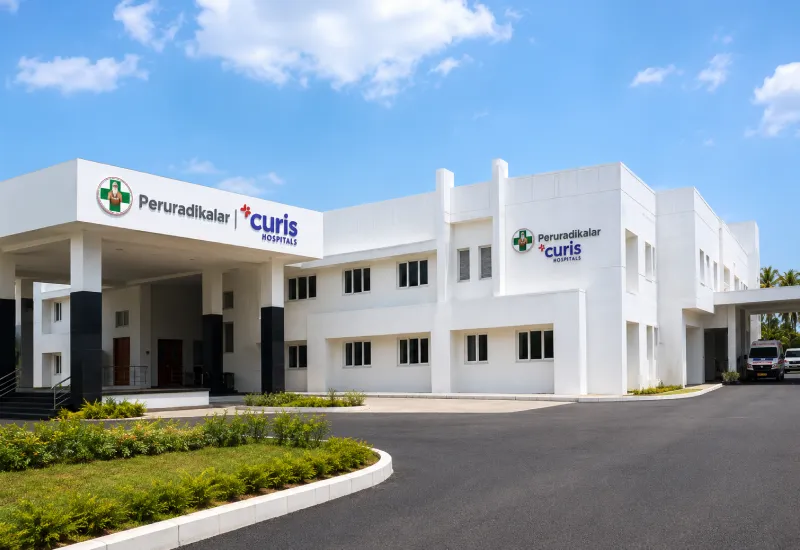
Curis Hospitals Coimbatore

Coimbatore, Tamil Nadu
Directions 3/177, Mudalipalayam, Kattampatti Post, Coimbatore - 641107

Curis Shanawaz Hospital

Trichy, Tamil Nadu
Directions A-20, Main Road, Thillai Nagar, Tiruchirappalli, Tamil Nadu - 620018

Curis Velan Hospital

Trichy, Tamil Nadu
Directions No. 1, Jail Corner, Highways Colony, Subramaniyapuram, Tiruchirappalli, Tamil Nadu - 620020

Connect With
Curis Care

Our team is ready to assist you